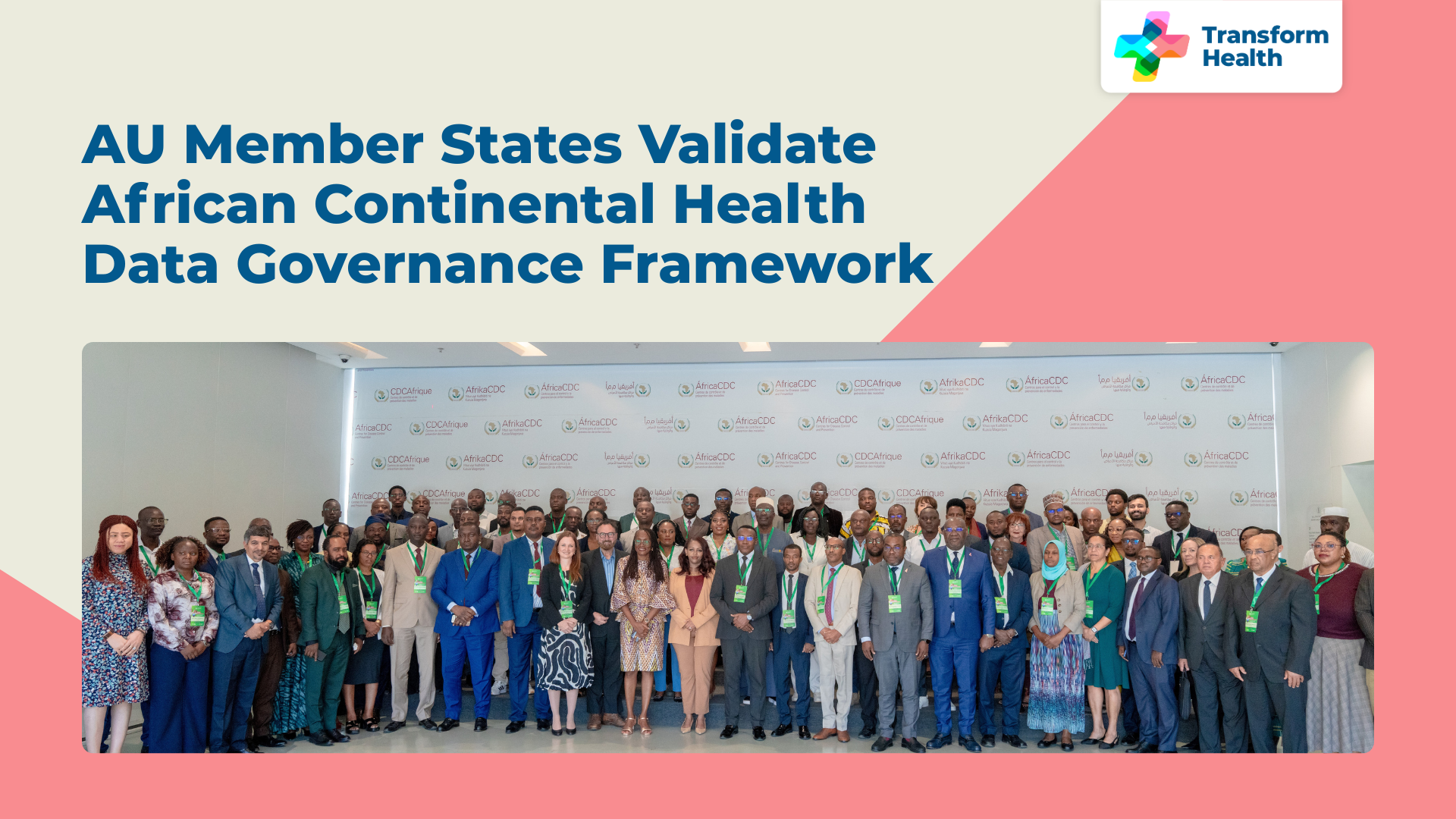
Validation marks a major step toward a shared continental approach to secure, ethical and sovereign health data governance, ahead of finalisation and consideration through African Union policy processes.
_______________________________________________________________________________________________________________
Addis Ababa, Ethiopia, 22 October 2026 – African Union (AU) Member States have validated the African Continental Health Data Governance Framework, paving the way for Africa’s first common continental approach on the lawful, secure, ethical and sovereign governance of health data.
The framework aims to establish an integrated African health data ecosystem in which Member States govern, protect and use health data. It will also guide countries in developing national legislation, policies and governance systems, while enabling secure data sharing to improve disease surveillance, public health responses and healthcare delivery.
Developed through successive consultations with AU Member States and stakeholders since 2025, the Framework has enabled countries to assess its provisions against diverse legal, institutional and digital-health
contexts.
Its validation comes as Africa’s health systems become increasingly digital. Electronic health records, health information exchanges and artificial intelligence (AI) offer new opportunities to improve healthcare, strengthen disease surveillance and make better use of limited resources amid declining development assistance.
However, gaps in privacy protection, cybersecurity and legal safeguards increase the risk of data misuse, algorithmic bias and declining public trust. The framework addresses these challenges by establishing common safeguards while allowing countries to retain control over their health data.
Kenya is among the countries advancing digital health through legislation, institutional reforms and investment in digital systems. Its Digital Health Act of 2023 and Data Protection Act provide a legal foundation for managing health information, while the Digital Health Agency is developing an integrated system for securely exchanging health data. These reforms are supporting the transition from paper-based records to digital services, including faster processing of health insurance payments – facilitated by the widespread use of mobile money.
“Our experience shows how digital health can improve healthcare delivery. This framework will provide common safeguards and enable countries to share health data securely while retaining control over it,” said Dr Ayub Manya, Senior Deputy Director of Medical Services (Digital Health) at the Ministry of Health in Kenya.
Africa CDC Director-General Dr Jean Kaseya said the framework marks a shift towards African ownership and governance of health data, placing Member States at the centre of decisions on how their data is managed, protected and shared. “For too long, Africa’s health data have been fragmented across disconnected systems. This Framework puts governments in the lead and Member States at the centre of decisions on how health data are governed, protected and used. Health sovereignty begins with owning, protecting and using our own data,” he said.
The framework builds on existing AU instruments, including the African Union Convention on Cyber Security and Personal Data Protection (Malabo Convention), the AU Data Policy Framework (2022) and the Digital Transformation Strategy for Africa (2020–2030).
A key feature is its proposed federated approach, which would allow countries to share information securely across borders without relinquishing oversight of their national health data systems. This would enable more coordinated responses to disease outbreaks and other public health threats.
With validation now secured, Africa CDC will finalise the framework based on the agreed amendments and advance it through relevant African Union policy processes, with consideration anticipated in 2027. Member States will then lead its implementation, with technical assistance from Africa CDC and Transform Health, a partner supporting the development and validation process.
“Robust legislative and regulatory frameworks that ensure the responsible and equitable collection and use of health data are the bedrock of trustworthy digital health and AI transformation,” said Mathilde Forslund, Chief Executive Officer of Transform Health. “The validation of this Framework by AU Member States demonstrates inspiring regional leadership.”
She added: “By co-creating rules that protect rights, ensure equity, and uphold data sovereignty, Africa is establishing the safeguards for responsible health data governance that can guide global health governance.”
Judith Nguimfack, Head of the Digital Health and Information Systems Division at Africa CDC, said the next priority is translating the continental framework into national action. “This Framework belongs to Member States. Countries across the continent have examined it against their own legal, institutional and digital realities and reached common ground on the principles that should guide health data governance in Africa,” she said.
“With validation completed, the priority now is to finalise the agreed amendments, advance the Framework through the relevant AU policy processes and, most importantly, prepare for implementation at country level,” Ms Nguimfack added.
###
About Transform Health
Transform Health is a global coalition of 230+ organisations across 65 countries. We work to strengthen the enabling environment for the equitable, inclusive, sustainable, and rights-based digital health transformation to achieve universal health coverage by 2030.
Website | LinkedIn | YouTube | X | Bluesky
Contact: Tejas Tandon, Communications Manager | tejas.tandon@transformhealthcoalition.org
About Africa CDC
The Africa Centres for Disease Control and Prevention (Africa CDC) is the African Union’s autonomous public health agency. Established in 2016 and launched in 2017, it works with Member States to strengthen public health systems and improve disease prevention, preparedness and emergency response. Headquartered in Addis Ababa, it operates through five Regional Coordinating Centres.
For more information, visit: http://www.africacdc.org and follow Africa CDC on LinkedIn, X, Facebook, and YouTube.
Media enquiries: Directorate of Communications and Public Information,
Africa CDC | Email: communications@africacdc.org